
About this article: HomFax™ is a trademark of the Ambassador Claim Handling System and a trading name of Regulus Development Company. Public adjusting services, where provided, are performed by Octavian Payne-Johnson, Texas public insurance adjuster licence #3277221. HomFax is paid for inspection, documentation, estimating, verification and licensing of its technology. We are not paid a percentage of any insurance settlement, and our compensation does not change with the outcome of a claim — we are paid the same whether a property turns out to have no covered damage or a great deal of it. This article is general education for property owners. It is not advice about your specific policy or claim, and reading it does not make you a client.
What your homeowners policy really means, before and after a loss
It is the most expensive document most people own and the least read. Here is what is actually inside it, and what it will ask of you on the worst day of your year.
By HomFax™ — homeowner education for North Texas · 2026-08-12
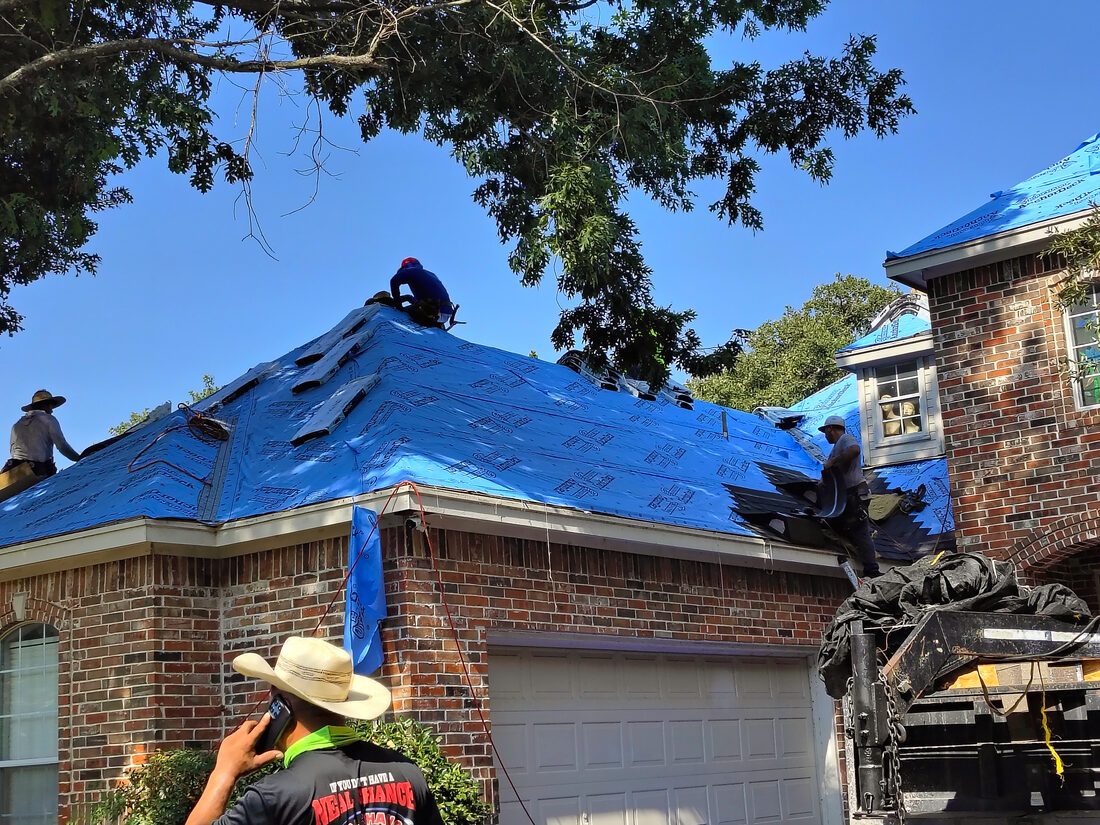
Somewhere in your house there is a drawer, or a shelf in a cupboard, or a folder on a laptop nobody has opened since the closing. In it is a document forty or sixty pages long that you have paid for every month for years, that you were required to buy before anyone would lend you the money for the house, and that you have almost certainly never read to the end.
It is the most expensive thing most people own and never look at. And it is written, with great care, in a language designed to be precise rather than welcoming.
You will read it eventually. Almost everyone does. But most people read it on a Tuesday afternoon in the week after something has happened — after the hail, or the fire, or the pipe that let go behind the wall while nobody was home — and by then the reading is no longer a review. It is an argument you are already losing, conducted from behind, against people who read this kind of document for a living.
There is a better week to read it. It is any week in which nothing has happened.
The crisis is not only the price
Texas homeowners have watched premiums climb hard, and the climb is real: severe-weather exposure, the cost of materials and labour, and the price of moving catastrophe risk off to reinsurers who have grown less willing to hold it. Dallas–Fort Worth carries one of the heaviest homeowner-insurance burdens in the state.
But price is the part of the problem that announces itself. It arrives in an envelope, once a year, with a number on it, and it makes people angry in a way that is at least directed at something visible.
The other part arrives quietly, and it is this: you can pay more this year than last and be covered for less.
A renewal can carry a larger wind or hail deductible than the policy it replaces. It can settle your roof at actual cash value where the old one paid replacement cost. It can reduce what it pays for your possessions, or for somewhere to live while your house is uninhabitable. It can add exclusions — flood, ongoing leakage, mould, foundation movement, sewer backup — or attach sublimits to jewellery, electronics, code upgrades, or the simple business of making new materials match old ones.
None of this arrives as a letter that says we have reduced your coverage. It arrives as an endorsement, inside a renewal packet, in a stack of paper that looks exactly like last year's stack of paper.
So the question worth asking is not what is my premium. It is harder and more useful than that:
If this house is damaged tomorrow, what is my deductible in dollars, what is excluded, what will be depreciated, what evidence will I have to produce, and what will actually reach my bank account when every condition in this document has been applied?
Most homeowners cannot answer that. It is not a failure of intelligence. Nobody ever told them the question existed.
The declarations page is the cover, not the book
The first page is the one everybody knows: the declarations page. It names you, names the property, sets out the policy period, the coverage limits, the deductibles, and the endorsements attached. It is genuinely important and it is where any review should begin.
It is not the policy.
The policy is the declarations page plus the policy form, plus every endorsement listed on it, plus the renewal notices that have amended it along the way. Read apart from one another they are reassuring. Read together they are accurate.
A Texas homeowners policy generally organises itself into a handful of protections: the dwelling itself; your personal property; other structures — the detached garage, the shed, the fence; additional living expense if a covered loss makes the house unlivable; personal liability; and medical payments for certain injuries on the property.
Each of those has its own limit, its own definitions, its own exclusions, its own conditions, and sometimes its own deductible.
Keep every renewal, not just the current declarations page. Forms change. Endorsements are added and dropped. The carrier's name can stay the same and the policy number can stay the same while what you have bought quietly becomes a different thing.
The number you do not know in dollars
The deductible is the part of the loss you keep. That is all it is, and it is the single figure most homeowners get wrong.
Most people can tell you their all-peril deductible — a thousand, twenty-five hundred, five thousand. Fewer know that a separate deductible commonly applies to wind, to hail, to named storms. Fewer still know whether that separate deductible is a dollar amount or a percentage.
It matters enormously, because a percentage is calculated against the dwelling limit, not against the size of the loss.
Take a house insured at $500,000 with a two per cent wind and hail deductible. That deductible is $10,000. If hail does $35,000 of damage, the first ten thousand is yours before anybody considers depreciation, exclusions, or sublimits — and while your deductible for a burst pipe might still be a thousand dollars, sitting in the same policy, for a different peril.
The Texas Department of Insurance is explicit that policyholders may carry different deductibles for different coverages and different losses.
There is a further turn of the screw. Many policies raise the dwelling limit automatically at each renewal to track construction costs. That is sensible, and it means your percentage deductible has been quietly growing too, every year, without anyone mentioning it.
Do the multiplication. Write the answer down somewhere you will find it. Most people have never once seen this number expressed in dollars, and that is precisely why it lands the way it does when it finally has to be paid.
One roof, two values
Of everything in the document, the valuation method is the term that decides the most money.
Replacement cost value is broadly what it costs to repair or replace what was damaged, with materials of like kind and quality, at today's prices, subject to the policy's limits and conditions.
Actual cash value is replacement cost less depreciation for age, wear, and condition.
TDI offers a plain example. A new roof costs $10,000 and the deductible is $2,000. Under replacement cost, the payment might be $8,000. If the roof's actual cash value is $7,000 because it has aged, the payment might be $5,000 after the same deductible — and the shortfall is yours.
Here is the part that catches people who believe they did everything right: a dwelling can be insured at replacement cost while the roof specifically is not. That split is common. It arrives as an endorsement — an age schedule that steps the payout down for every year the roof has lived, a material-specific provision, a cosmetic-damage limitation that excludes dents that do not leak.
So ask, and ask in writing if you can:
- Is the dwelling settled at replacement cost or actual cash value?
- Is the roof settled at replacement cost or actual cash value?
- Is there a roof-age or roof-material endorsement, and may I see the schedule?
- Is there a cosmetic-damage limitation?
- Is depreciation recoverable, and under what conditions?
- What deadline applies to completing repairs and recovering it?
Six questions. A phone call. It is the cheapest hour of the year.
The second payment, and the condition attached to it
A cheque arrives. It is smaller than expected but it is real, and after weeks of uncertainty there is enormous relief in a real number. Many homeowners bank it and consider the matter closed.
Often it is not closed. Often it is half done.
On a replacement-cost claim, the first payment is commonly the estimated cost of repair, less the deductible, less depreciation withheld. The withheld portion — recoverable depreciation — is released after the work is actually completed and proof of that is submitted. TDI describes exactly this sequence: an initial payment after inspection, then the withheld depreciation after the completed-job bill arrives. The policy may impose a deadline for finishing the work.
Which means the second payment is conditional on you doing something, within a window, and proving it.
So keep:
- Photographs and video of the damage taken before permanent repair
- The insurer's own estimate and scope of work
- Contractor proposals and the final invoice
- Proof of payment, receipts, permits, inspection records
- Every written word about deadlines or depreciation requirements
- A dated claim diary — who you spoke to, when, about what, and what they said
Do not assume the depreciation will find its own way to you. It is released against proof, and proof is a thing you assemble.
What it costs to rebuild is not what it costs to buy
Four numbers attach to your house and none of them are the same: what you could sell it for, what the appraisal district says it is worth, what you still owe on it, and what it would cost to build it again.
Only the last one matters after a fire.
A $350,000 house may cost considerably more or less than $350,000 to reconstruct, depending on labour, materials, the design, current code requirements, debris removal, and — this is the one people miss — whether five thousand other houses in the same county need rebuilding in the same season. Regional catastrophes move the price of putting a house back up.
Texas guidance notes that insurers commonly require a dwelling to be insured for at least eighty per cent of replacement cost, and some require the full hundred. Fall short and the difference can land on you.
Review Coverage A once a year, and always after: a remodel or addition; a new roof; solar; custom cabinetry, specialty flooring, or premium finishes; a detached structure going up; or a change in local code requirements.
And ask what else is available — extended replacement cost, ordinance-or-law coverage for the parts of a rebuild that modern code demands but your old house did not have, debris-removal limits, foundation and water endorsements, other structures, additional living expense.
Water is not one question
People say water damage is covered and people say flood is excluded, and both sentences are too short to be true.
What matters is the source of the water, how long it ran, the path it took, and the specific words in your policy. A standard Texas homeowners policy commonly covers water that escapes suddenly and accidentally. It commonly does not cover flooding, long-running leaks, wear and tear, or mould except where mould is tied to a covered loss.
The distinctions in practice:
| What happened | Why the distinction bites |
|---|---|
| A supply line bursts | Often covered as sudden and accidental, subject to the policy's terms |
| A pipe has wept behind a wall for two years | Frequently disputed or excluded as continuous seepage, wear, or a maintenance failure |
| Rain enters through storm damage | Assessed differently from rain entering through pre-existing wear or an unsealed opening |
| The sewer backs up | Usually needs a separate endorsement, often with its own dollar limit |
| Surface water, rising water, storm surge | Generally the flood exclusion — separate insurance required |
| Mould | Often limited or excluded, and usually dependent on cause and on prompt mitigation |
Flood deserves its own paragraph because the assumption around it is so widespread and so costly. Standard homeowners insurance does not cover flood. TDI notes that flooding can happen anywhere, and that more than half the homes flooded by Hurricane Harvey sat outside designated flood zones. Many flood policies also impose a waiting period before they take effect.
Which means the week a storm is named is the week it is already too late to buy it.
The endorsements nobody reads
A policy contains less than most homeowners assume unless somebody deliberately added the pieces and chose the limits with care.
Worth reviewing, every one: sewer and drain backup; foundation or slab; ordinance or law; extended replacement cost; flood; earth movement; mould; scheduled jewellery, art, firearms, collectibles, electronics; home business property and liability; short-term rental exposure; umbrella liability.
An endorsement is not automatically a solution. It is a document with its own limit, its own deductible, its own exclusions, its own waiting period, and its own conditions. Read it as carefully as the thing it amends.
The inventory problem
Most homeowners know their dwelling limit. Almost nobody knows what their belongings are worth.
After a fire or a total loss, a household is asked to identify and value everything it owned. Not the furniture and the television — everything. The clothes, the linens, the pans, the tools in the garage, the hobby equipment, the boxes in the attic nobody has opened in nine years, the contents of every drawer in the house.
People do this from memory, grieving, on a deadline. It goes about as well as you would expect.
TDI recommends building and maintaining a property inventory: purchase dates, values, serial numbers, photographs, and video of every room — closets, drawers, garage, storage buildings included.
What that looks like in practice:
- Room-by-room photographs and a slow walk-through video, narrated
- Exterior photographs: roof, all four elevations, fencing, outbuildings
- Serial numbers for electronics, tools, appliances
- Receipts, appraisals, and model numbers for anything substantial
- All of it stored in the cloud or off site, because a fire that takes the house takes the filing cabinet
- A current copy of the policy and declarations page in the same place
Note too that personal property often carries sublimits — separate, lower caps for jewellery, cash, art, collectibles, firearms. The overall contents limit does not mean each item inside it is protected to its value.
An afternoon with a phone camera. That is the whole task, and almost nobody does it until they wish they had.
When you cannot live there
If a covered loss makes the house uninhabitable, additional living expense coverage — ALE, or loss of use — helps with the increased cost of living somewhere else. Temporary rent, higher food costs, the necessary expenses that would not exist if you were still at home.
It is subject to a dollar limit, and often to a time limit too. TDI indicates ALE may be capped at something like ten to twenty per cent of the dwelling amount, depending on the policy.
Ask what the limit is in dollars. Ask whether there is a clock on it. Ask what counts as an "additional" expense, whether housing is paid directly or reimbursed, and what proof is required.
Then understand the arithmetic: a family out of the house for eight months during a regional rebuild, when every contractor in the county is booked, can exhaust ALE well before the house is ready. Track every eligible expense from the first night.
Whether you can keep it at all
For a growing number of homeowners, the anxiety is not only what the policy pays but whether it will still exist next year.
Underwriting in Texas can weigh the property's condition, location, construction, replacement cost, claims history, and in some cases credit-based factors. Insurers may consult CLUE reports, which carry seven years of claims history for a person and a property — including, worth knowing, claims that were reported and paid nothing.
TDI states that a homeowner may request a written explanation of a declination or nonrenewal, and may complain to TDI where they believe the action was improper. Texas policies may be nonrenewed for specified reasons, including certain non-weather claim histories, prolonged vacancy, the condition of the property, or a carrier deciding to write less business in an area.
Where the voluntary market will not write, the Texas FAIR Plan Association or surplus-lines coverage may be available. Both are real options and both come with different pricing, forms, limitations, and regulatory protections than standard admitted-market coverage. Read them as new documents, not as replacements.
Before
The best claim file is one that mostly existed before the claim.
- Download and store the complete policy, declarations, endorsements, renewals, and agent correspondence
- Identify every deductible in dollars, wind and hail and named storm included
- Confirm roof valuation: RCV or ACV, age schedule, material limitation, cosmetic limitation, depreciation conditions
- Test Coverage A against current rebuilding cost, not market price or loan balance
- Check limits for contents, other structures, ALE, ordinance or law, water backup, and any scheduled property
- Build the photographic inventory, roof and interior and outbuildings
- Keep repair, maintenance, inspection, and upgrade records
- Consider flood separately — always separately
- Keep emergency contacts for carrier, agent, lender, and a restoration vendor
- Review once a year, and after anything substantial changes
After
Life safety first. Then stop the damage getting worse. Then document, carefully, before anything is made permanent.
- Report the claim promptly
- Photograph and video everything before permanent repair, where it is safe
- Take reasonable temporary steps — tarp the roof, board the window — because the policy expects you to prevent further loss
- Preserve damaged materials and allow reasonable inspection
- Keep every receipt: mitigation, materials, temporary repair, living expenses
- Maintain the claim diary — date, time, name, subject, what was sent, what came back
- Ask for written explanations of coverage positions, estimates, depreciation, and any denial or partial denial
- Read every letter, including the reservation-of-rights letter, especially the reservation-of-rights letter
- Do not sign releases, assignments, or contracts you do not fully understand
- Do not treat the first estimate, first inspection, or first payment as the final word on anything
TDI cautions against permanent repairs before the insurer has had a chance to inspect. Disposing of the evidence is a way of losing an argument you have not had yet.
The clock, and why you still document
Texas law sets deadlines for insurers, subject to exceptions and to extensions after declared disasters. TDI states that an insurer must generally acknowledge a claim within fifteen days, accept or deny within fifteen business days of receiving the information it requested, and pay within five business days of agreeing to pay.
Those deadlines are useful and they are not a substitute for your own records. The clock runs on information the carrier has received — which makes what you sent, and when you sent it, a fact worth being able to prove.
Keep the acknowledgment letters, the information requests, the proof-of-loss forms, the estimates, the inspection reports, the payment letters, the reservation-of-rights letters, the denials, the invoices, and every exchange with the carrier, the contractor, the lender, and the adjuster.
Appraisal is a tool, not a remedy
Appraisal is widely misunderstood, usually by people who have just been told to invoke it.
Per TDI, appraisal is generally a mechanism for resolving disputes about the amount of a loss. It is not a mechanism for deciding whether a loss is covered. Each side selects an appraiser; the appraisers select an umpire if they cannot agree; costs are shared as the policy provides.
So before invoking it, work out what you are actually arguing about. Is coverage agreed and only the price in dispute? Is the disagreement about what caused the damage? Is an exclusion in play? Is it a question of interpreting a condition?
Appraisal answers one of those questions well and the others not at all. Using the wrong tool costs time you may not have.
Who represents whom
This is the part worth being precise about, because the roles look similar from the outside and are not similar at all.
The adjuster who arrives after your claim is, in most cases, working for the insurer. That is not an accusation; it is an employment relationship, and a professional one.
A Texas public insurance adjuster is licensed to represent the policyholder — not the carrier — in connection with a property claim, and may assist in documenting, presenting, and negotiating it within the scope of that licence. TDI is specific about the limits: public adjusters may not give legal advice, may not participate in repairing the property, and may not engage in conflicts of interest. Verify any public adjuster's licence with TDI before hiring one, and read the fee agreement before signing it.
A public adjuster is not your lawyer, not your contractor, and not a guarantee of any particular outcome. For legal analysis — statutory violations, deadlines to sue, your rights and remedies — that is a qualified Texas attorney, and it is a different profession.
Knowing which of these people is in your kitchen, and whose interests they carry, is worth more than most of the advice they will give you.
The questions
Before the next loss, you should be able to answer these without looking:
- What are my all-peril, wind/hail, and named-storm deductibles in dollars?
- Is my roof settled at replacement cost or actual cash value?
- Which endorsements limit roof, water, mould, foundation, code upgrade, or personal property coverage?
- Is Coverage A enough to rebuild at today's construction costs?
- What are my limits for ALE, other structures, contents, and ordinance or law?
- Do I have flood and sewer-backup protection, or am I assuming?
- What must I do, and by when, to recover withheld depreciation?
- How long do I have to report a loss, complete repairs, and submit records?
- Where are my photographs, inventory, receipts, and policy documents stored?
- When a claim happens, who in the room represents me?
Ten questions. Nobody is coming to ask them on your behalf.
The last thing
A homeowners policy is not understood on the day it is bought. It is understood on the day its owner can say plainly what it will pay, what it will not pay, and what it will require of them in return.
Most people buy it because a lender insisted. It is worth managing as something else entirely: a plan for transferring risk you cannot personally absorb, which you have already paid for, and which works considerably better for people who have read it.
Do not wait for the storm, the fire, the failed pipe, or the letter that begins we regret to inform you, to discover that the deductible is unaffordable, the roof is on actual cash value, flood was never included, code upgrades are underinsured, the inventory does not exist, the ALE runs out in month four, and the second payment depends on paperwork nobody mentioned.
Read it on a quiet week. Ask the questions in writing. Keep the answers.
The document is already yours. All that remains is knowing what it says.
- Texas Department of Insurance — Homeowners insurance guide
- Texas Department of Insurance — Storms and disaster claims
- Texas Department of Insurance — Public insurance adjusters
- Texas Insurance Code ch. 542 — Prompt payment of claims
- Texas Insurance Code ch. 4102 — Public insurance adjusters
Every factual claim above traces to one of these. Check them rather than taking our word for it.